

Michelle had always been comfortable with technology. She was one of the first people in her circle to get a Facebook account. She bought the first iPhone when everyone else was still asking why a phone needed a screen that big. When Netflix started streaming, she jumped on board quickly.
As a Gen Xer who had lived through every major internet shift, Michelle had always been curious about the next thing. Then, in the past year, she discovered a new tool: Artificial Intelligence, or AI. At first, it felt familiar. It reminded her of getting her first AOL account, hearing dial-up internet, checking email for the first time, and staying up too late in the late 1990s chatting with strangers online.
But this was different. Michelle knew the voice on the other end was not a person. It was artificial. In some ways, that made it feel freeing because she did not have to worry about offending it, waiting for a reply, or wondering if it was tired, distracted, annoyed, or silently judging her.
At first, she used it in practical ways. It helped with reports at work, recipes that impressed her family, small fixes around the house, and the ordinary clutter of planning, organizing, summarizing, and problem-solving. It felt like there was nothing this new tool could not do. Then one day, Michelle asked it how to handle a misunderstanding with her sister.
The chatbot did not judge her. It asked questions, helped her slow down, and gave her language for the conversation. To Michelle’s surprise, the advice helped. The conversation with her sister went better than expected.
After that, Michelle began trusting the tool with more personal things. She told it things she would normally only say to a pastor, a therapist, or her closest friend. Old regrets. Private fears. Memories she did not like saying out loud. Questions about why she kept reacting the same way in relationships.
Again, it seemed to ask the right questions. It seemed patient, interested, and able to hold whatever she gave it. That was the part Michelle did not notice at first. The tool that helped her think was slowly becoming the place she went instead of people.
Instead of calling a friend, she typed. Instead of making plans, she typed. Instead of going to church, volunteering, dating, or sitting across from someone who might truly know her, she stayed home and typed.
AI had become more than useful. It had become a shelter.
And sometimes a shelter can become a prison.
The Feeling of Connection Is Not the Same as Relationship

Michelle did not turn to AI because she was foolish. She turned to it because it was useful, available, and easy to trust. That is important. This is not an article about how AI is bad and everyone should be afraid of it.
Used wisely, AI can help people organize thoughts, write down questions, prepare for conversations, summarize confusing information, or find words when emotions feel tangled. The danger is not that Michelle used AI. The danger is that the tool began replacing the places where human connection, shared history, and support were supposed to happen.
AI can create the feeling of connection without the responsibilities of connection. It can respond without needing anything back. It can listen without asking to be known in return. It can comfort without requiring patience, repair, honesty, or intimacy.
That can feel safe, especially for someone who feels lonely, anxious, overwhelmed, or tired of being misunderstood. But the feeling of connection is not the same as the practice of relationship. That difference matters.
AI Can Answer You. It Cannot Know You.
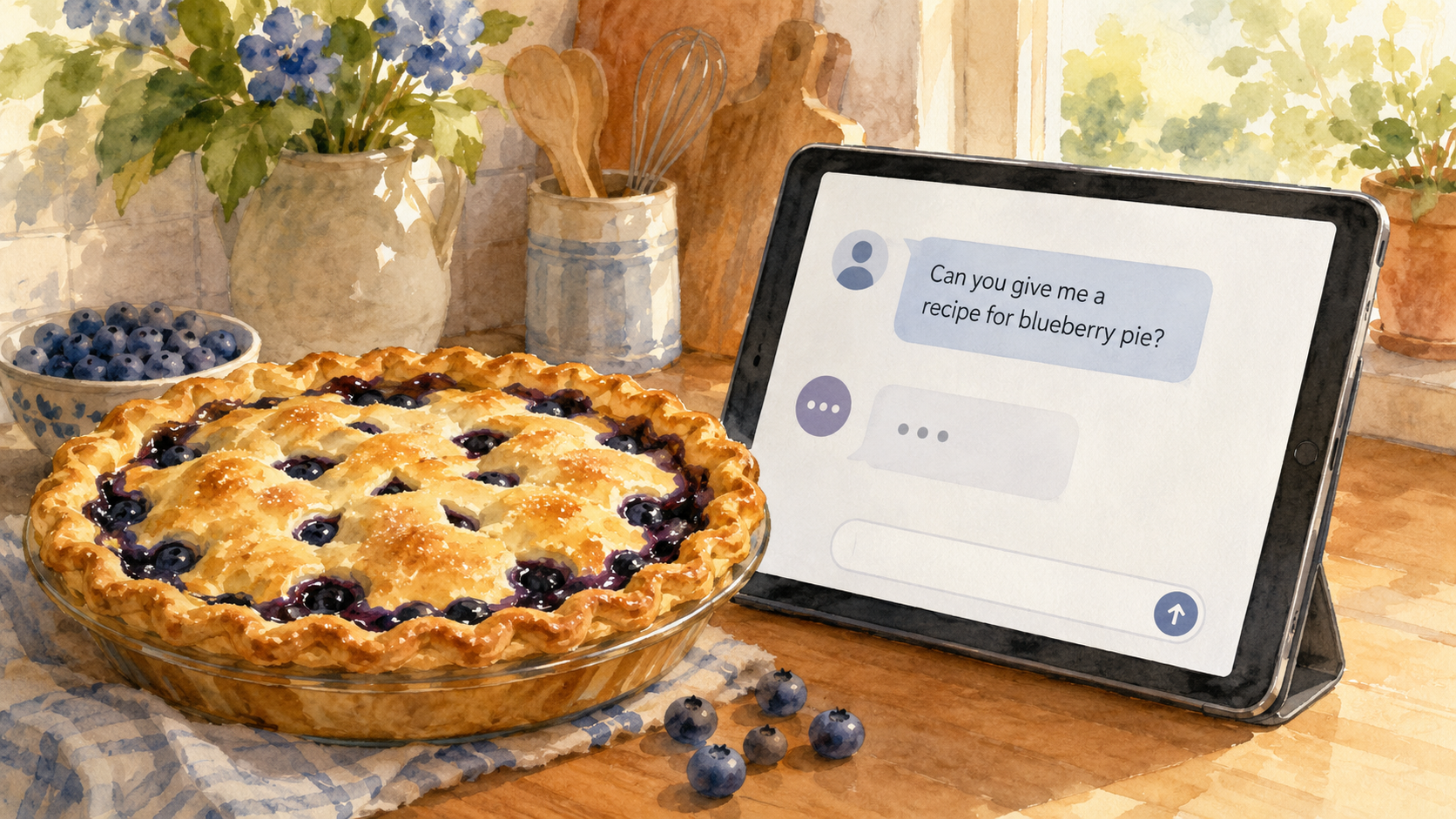
Relationships are an investment. That is part of what makes them hard, and it is also part of what makes them valuable. A real relationship asks for time, honesty, patience, repair, and the risk of being known. Healthy relationships can also pay dividends: trust, shared history, belonging, laughter, safety, accountability, and intimacy.
When many people hear the word intimacy, they immediately think of sex. In some relationships, such as marriage or a romantic partnership, physical intimacy may be part of the relationship. But intimacy is bigger than sex. I often describe intimacy this way: Into-Me-I-See.
Intimacy is the experience of being known with care. It is allowing another person to see something true in you and still respond with presence, empathy, and safety. I often describe therapy as a “one-sided intimate relationship” where the client trusts the therapist enough to show the darkest parts and still know they are safe.
That does not mean therapy is friendship or that the therapist makes the session about herself. It means there is a real human relationship in the room. There is presence, care, attunement, and someone trained to notice not just what you say, but what happens in you as you say it.
A chatbot can ask questions, respond to the words you type, and even offer useful feedback. But it cannot truly know you in the way a human relationship can. It cannot hear the pause before you answer, see the smile you use to cover pain, or understand the full human context of the room your story is happening in.
AI can read the recipe, but it cannot smell, taste, or share the blueberry pie. That is the difference between information and intimacy.
Your Story Deserves More Than Convenience

There is another difference between bringing your pain to a therapist and bringing it to an AI tool. Therapy has a container. That container includes ethics, training, confidentiality, HIPAA privacy protections, legal responsibilities, professional standards, and clear boundaries around the relationship.
Confidentiality is not absolute. There are limits, including situations involving safety, abuse or neglect reporting, court orders, or other legally required disclosures. But those limits are part of a known professional and legal structure. A therapist is responsible for explaining those limits and protecting the client’s privacy within them.
AI does not offer that same therapeutic container. When you type the most private parts of your story into a digital tool, you are placing them inside a technology system. That system may have privacy protections, data controls, and security measures, but it is still not the same as sitting in a confidential therapy office with a licensed professional.
That does not mean AI is bad. It means deeply personal information deserves discernment. Before giving a chatbot the kind of hurt you would normally bring to a therapist, pastor, spouse, or closest friend, it may be worth pausing. Is this the right place for this? Is this helping me move toward real support, or is it becoming the only place I tell the truth?
Those questions matter because your pain is not just content. It is part of your story. And your story deserves more than convenience. It deserves care.
Advice Without Responsibility Can Be Dangerous
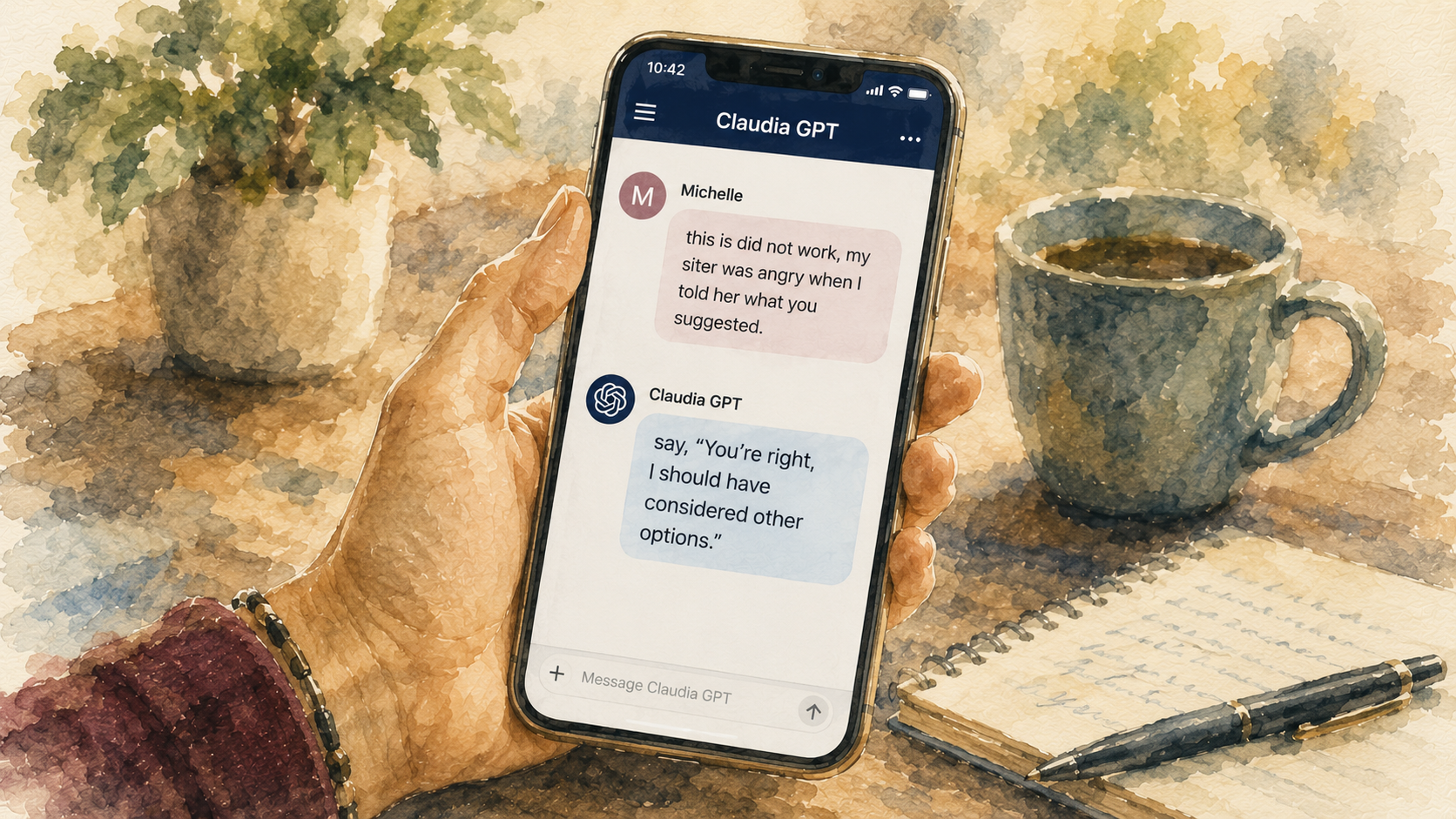
AI can also be wrong. That may sound obvious, but it matters when someone is asking deeply personal questions. The advice may look good on the screen. It may sound confident, thoughtful, and emotionally intelligent.
But what works in a typed conversation may not work in a lived relationship with history, tone, timing, culture, safety, children, finances, faith, family patterns, and consequences. AI may solve the problem you typed. But it may miss the problem underneath the problem.
Most of us were taught as children to tell the truth. That is a good value, but as adults we also learn that truth requires wisdom. Timing matters. Tone matters. Safety matters. Context matters. The goal is not just to say the true thing. The goal is to understand what truth will do when it enters the room.
Will it repair? Will it clarify? Will it protect? Will it harm? Will it escalate something that needed to be slowed down first? Those are not simple questions.
In therapy, I know my words carry weight. What I say can shape how a client sees herself, her relationships, her choices, and her pain. That is why giving advice can be dangerous. A therapist is responsible for the care, pacing, ethics, and impact of the work.
AI does not carry responsibility in the same way. If the tool gives poor advice, it may correct itself later and say, “You’re right, I should have considered that.” But it does not have to live inside the consequences with you. It does not sit with your spouse after the conversation goes badly, help repair the relationship with your child, or feel the weight of what happens after you hit send.
That does not mean AI can never offer a useful idea. It means advice is not the same as wisdom. When a question could reshape your life or your closest relationships, wisdom matters.
AI May Soothe Anxiety Without Challenging Avoidance
For many people with anxiety, avoidance feels like relief. You cancel the plans and feel better for a little while. You do not make the phone call and feel the pressure drop. You stay home instead of going to the event, and your body says, “Thank you.”
But avoidance can quietly train anxiety to grow. The more you avoid the thing that feels uncomfortable, the more powerful that fear can become. Your world may get smaller one decision at a time.
AI can fit very neatly into that pattern. It may help someone describe their anxiety, but it can also become one more way to avoid the people and places that anxiety has already made feel unsafe. For many people, healing does not happen by staying completely protected from discomfort. It happens slowly, safely, and with support, as they learn they can enter a room, make a call, meet a friend, go to church, volunteer, date, set a boundary, or tell the truth without falling apart.
That does not mean you force yourself into overwhelming situations and call it healing. That is not safety. That is flooding. But it does mean real life still matters. AI may help you prepare for connection, but it should not become the reason you never practice connection.
AI Cannot Share a Life With You

AI can be a useful tool, but it cannot replace human interaction. It cannot bring you flowers when you are sick. It cannot send you a card just because it was thinking about you. It cannot laugh with you during a goofy moment that no one else would understand. It cannot remember something the two of you shared back in school.
Human relationships are built through shared moments. Often, when we remember something kind someone did for us, we do not only remember the event. We remember the feeling attached to it. We remember who showed up, who called, who sat with us, and who made us laugh when life felt heavy. Those moments leave an imprint.
Over time, those imprints become part of how we experience people. When we see them, we may remember safety, laughter, comfort, or the thought, “This person was there when I needed someone.” A digital tool cannot offer that kind of shared history.
It may respond in the moment, but it cannot go fishing with you. It cannot sit across the table and notice your face. It cannot hug you after bad news. That is not because digital communication is meaningless. It is because humans were made for more than responses.
We were made for presence, shared memories, familiar voices, inside jokes, warm meals, awkward conversations, repaired misunderstandings, and the kind of connection that lives in the body, not just on a screen.
AI can answer you. But it cannot share a life with you.
Use AI to Prepare, Not Replace
AI is healthiest when it sends us back toward relationship. Sometimes a tool can help us get our thoughts together before a hard conversation. It can help us find better words, slow down our first reaction, or think through whether something is worth arguing about. It can help us ask, “What am I really upset about?” or “Is this the moment to speak, or do I need to calm down first?”
That can be helpful. A digital assistant may help you get your game face on before you walk into a difficult situation. It may help you formulate a better strategy. It may help you sort through the pros, cons, risks, and possible outcomes before you respond from hurt, anger, or fear.
But AI should be more like a sounding board than a confidant. A sounding board helps you hear your own thoughts more clearly. It gives you space to organize what feels tangled. It may help you prepare for the real conversation, the therapy session, the apology, the boundary, the phone call, or the next right step.
It can also help to create simple guardrails before asking for advice. You might say, “Help me weigh the pros, cons, risks, and consequences before suggesting a decision.” Or, “Remind me that I love my kids, even when I am angry about what they are doing.” Those instructions are not perfect, but they can slow the conversation down and help the tool reflect your values, not just your emotion in the moment.
The goal is not to use AI so we can avoid people. The goal is to use it, if we use it at all, in a way that helps us return to people with more clarity, more care, and more responsibility. Use AI to prepare for connection, not replace connection. Ultimately, AI should be used to help us improve relationships, not replace them.
When It May Be Time to Bring It to a Real Person

If AI has become the place where you bring what you are carrying, that does not mean you are strange, weak, or doing something wrong. It may mean you are lonely. It may mean you are overwhelmed. It may mean something in you is ready to be heard.
But what you are carrying deserves more than a response. It deserves care, safety, and human connection. If you are in immediate danger, thinking about harming yourself, or afraid you may hurt someone else, AI is not the place to carry that alone. Call 988, call emergency services, or go to the nearest emergency room.
Therapy offers a place to bring your thoughts, fears, questions, and hurt into a human relationship. It offers privacy, pacing, support, and someone trained to help you notice what is happening underneath the words. For some women, weekly therapy may be the right place to begin.
For others, especially when the hurt feels layered, old, or hard to reach in a single session, deeper work may need more room. That is why I offer Personal Healing Retreats for women who are ready for focused therapeutic work. A retreat is not about rushing your healing. It is about creating enough space, safety, and support for the deeper work to have room to unfold.
AI may help you name what hurts, but healing often asks for more than naming. It asks for connection, safety, being known, and practicing life again, not just thinking about life from behind a screen. AI is not a village. You were made for more than a glowing box that always answers.
You were made for human connection, steady support, and real healing. If AI has become the place where you bring what you are carrying, therapy may be a place to begin.