

There is a reason authenticity feels terrifying.
It is not because you are fake. It is not because you do not know who you are. It is because, at some point, being fully yourself did not feel safe.
Your nervous system learned something long before you ever used the word authentic. It learned who is safe, who gets angry, who withdraws, who leaves, and who shames.

And it adjusted.
Maybe you became the helpful one, the strong one, the quiet one, the funny one, or the invisible one. Not because that was your truest self, but because that was the safest self.
When people say, “Just be yourself,” they forget something.
For many people, the self had to go into hiding in order to maintain connection.
Many people who struggle with authenticity are responding to attachment patterns or relational trauma that once made honesty feel unsafe.
Authenticity is hard because it requires the body to risk what it once survived by avoiding. It may involve saying what you actually feel, needing what you actually need, disappointing someone, outgrowing familiar dynamics, or letting people see the parts of you that were once criticized or shamed.
And your nervous system remembers.
Connection once meant survival.
So the question beneath authenticity is not, “Who am I?”
It is, “If I show who I am, will I still belong?”
This is why people may lie when they do not feel safe telling the truth. Not because they are manipulative, but because they are regulating the room.
This is also why people-pleasing, overfunctioning, and self-silencing behaviors often develop. They are trying to preserve attachment.
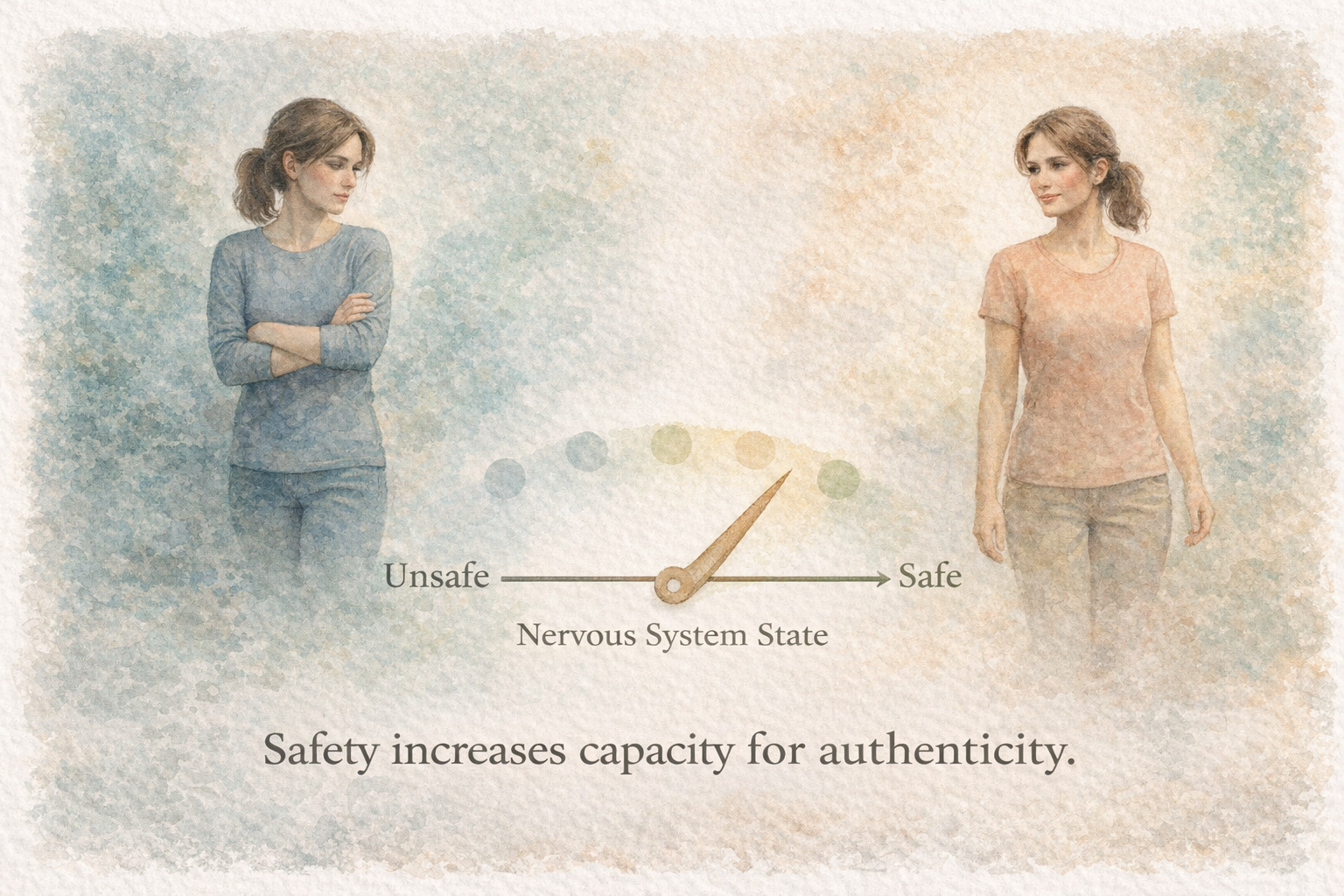
Authenticity is not a personality trait. It is a nervous system capacity. And capacity grows through safety.
Through small truths. Through emotionally safe, regulated conversations and healthy boundary setting.
This is the deeper healing work.
Not forcing yourself to be bold, but helping your nervous system learn that you can be real and still be connected.
You were never created to perform your way into belonging.
You were created to be loved as you are.
And the work now is not becoming someone new. It is building enough safety to let who you always were come forward through therapy.