

When Nice Women Get Snappy
She was almost out the door of the big box store.
The cart was full of ordinary life. Paper towels. Shampoo. A bag of dog food. A case of soda balanced near the front. The lights were bright. The checkout line had moved slowly. She was tired, ready to get home, and already thinking about what still needed to be done before dinner.
Then the young lady in the blue vest near the exit smiled and asked to see her receipt.
It was a small request. A routine one. Something that had been standard practice for years.
But her body did not experience it as routine.
Heat rushed up her chest. Her jaw tightened. Her shoulders went stiff. Irritation rose before she had words for it. By the time she reached the parking lot, she was angry. On the drive home, the interaction stayed with her. It replayed in her mind like a scene her body could not release.
She knew it did not make sense. No one had yelled at her. No one had openly accused her. No one had caused a public scene.
So why did it feel like an attack?
When Hangry Is Only Part of the Story
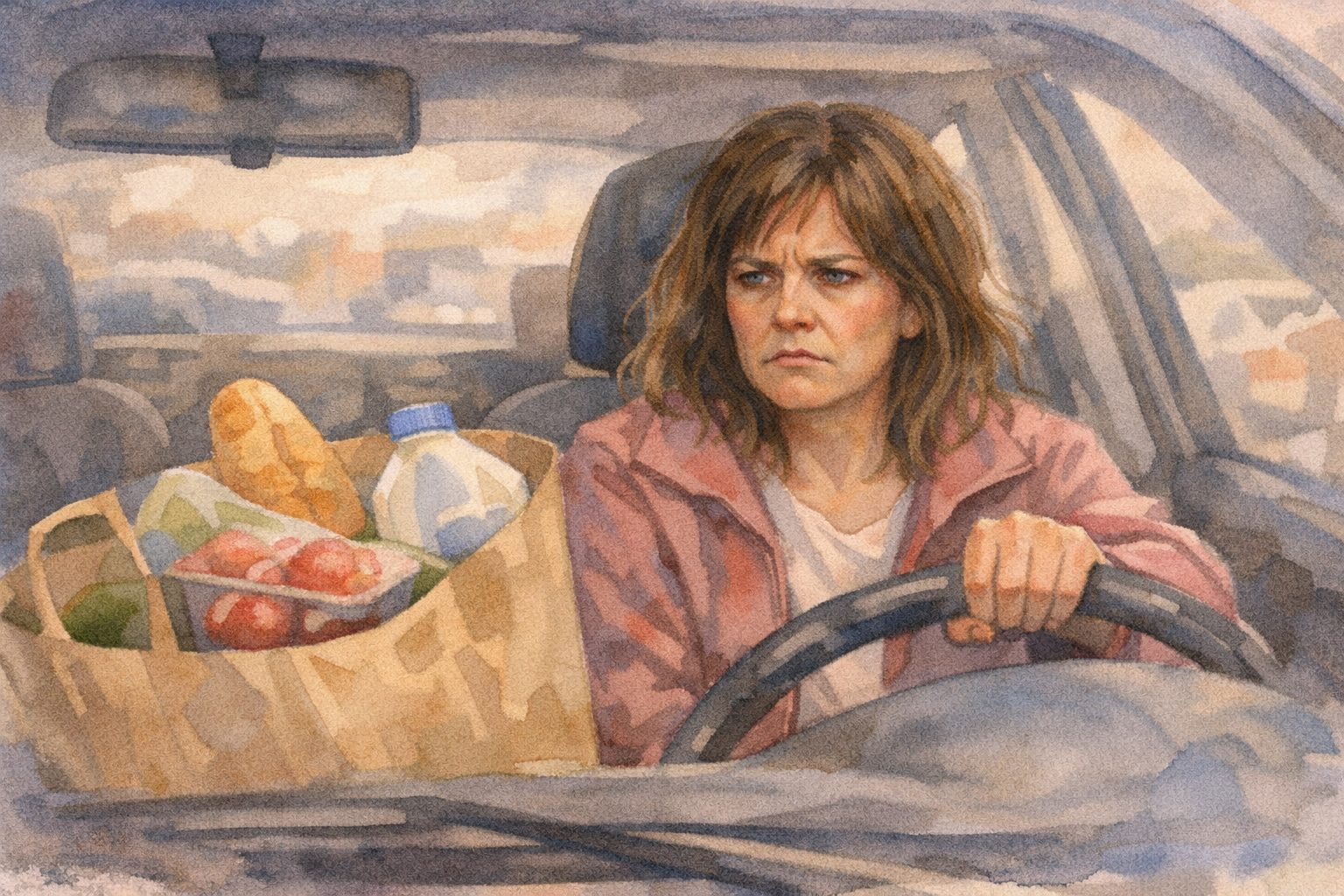
Sometimes she may call it being hangry. She is tired, overstimulated, hungry, and one more interruption is enough to tip her over the edge. There is some truth in that. Hunger, stress, and exhaustion can lower patience and make it harder to stay steady in the moment. But hangry is often only the surface explanation. It describes the condition her body was in, not the deeper reason the response felt so strong. A woman does not usually become this reactive overnight. Responses like these are often shaped over time. If she has spent years feeling criticized, controlled, doubted, or left without support, her body may learn to brace before her mind has time to sort out what is actually happening. That is why a simple interaction can feel bigger than it should. Being stopped can feel like being accused. Being questioned can feel like being blamed. Being watched can feel like being unsafe. The setting is current, but the emotion is older.
How EMDR Helps

Often when clients come to me with problems like these, we use a therapy called Eye Movement Desensitization and Reprocessing, or EMDR. EMDR can help when a woman knows something should not feel this intense, yet her body responds as if the situation is much bigger than it is. In session, I help her focus on the part of the experience that feels the strongest while we use gentle back-and-forth stimulation. That may look like following my hand with her eyes as it moves from side to side, or holding small hand tappers that gently pulse from one hand to the other. This rhythm helps the brain begin to process what has felt stuck, so the experience no longer holds the same charge.
In situations like this, I am often not just addressing irritation. I am helping a woman uncover what the irritation is protecting. Sometimes anger on the surface is covering something older underneath it, such as fear, shame, helplessness, or the pain of being blamed for something she did not do. What looks like a quick temper may actually be a nervous system that learned long ago to brace for danger.
What the Store Moment Was Touching
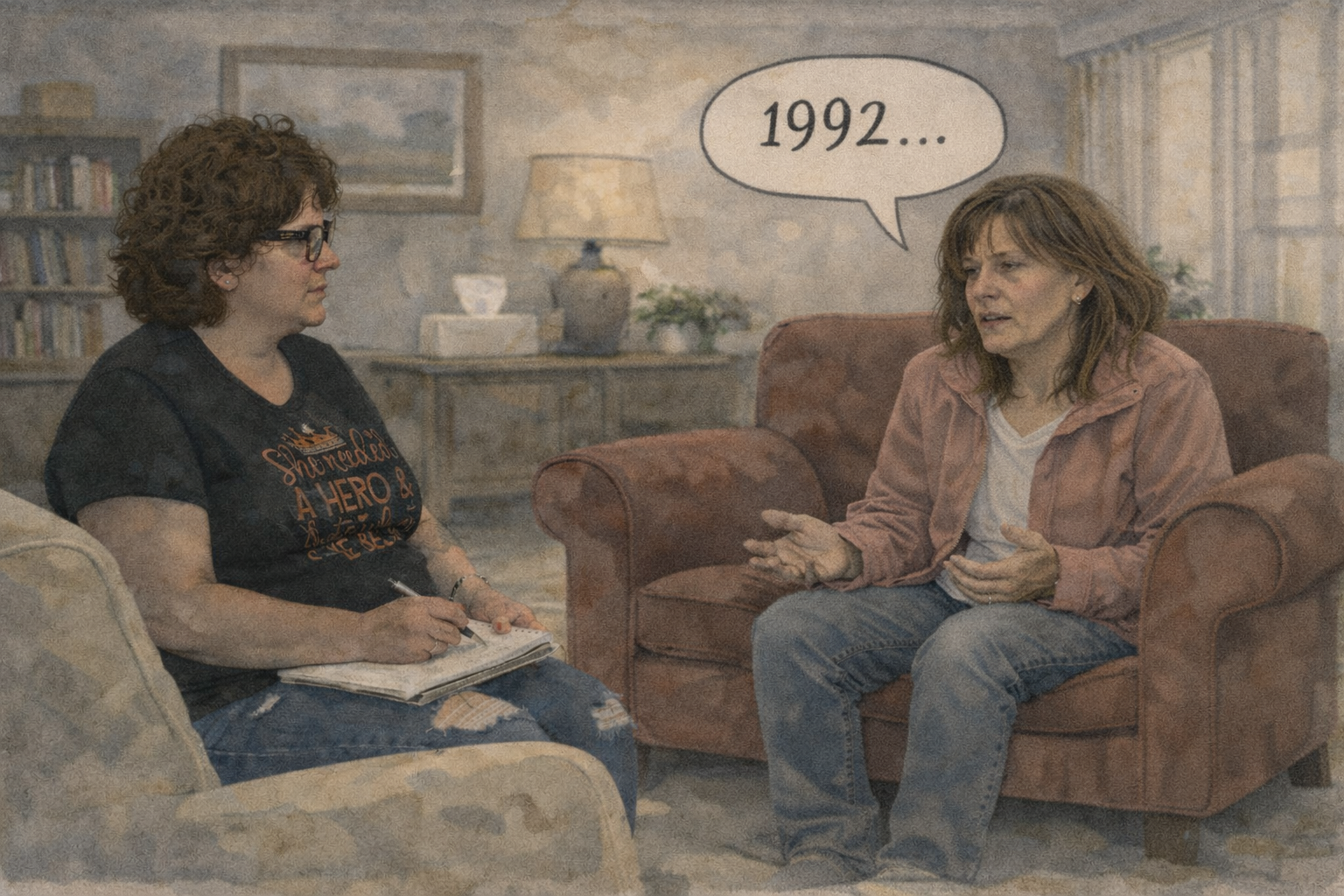
As we work through the memory, many women begin to realize the encounter in the store was never only about the store. It was about what the interaction touched. A routine request may have stirred up the feeling of being singled out. A simple question may have echoed older experiences of accusation. A glance from a stranger may have awakened a familiar sense of danger. Her body was reacting like it needed to protect her before her mind had time to understand why.
As that charge begins to come down, the goal is not to erase the past or pretend it did not happen. The goal is to help her experience what is in front of her for what it is. A receipt check at the door can become just that. A brief exchange. A passing inconvenience. Not proof that she is in trouble. Not proof that she is unsafe. Not proof that she has to brace for impact.
Relief Without Shame

This is often the relief women are looking for, even if they do not have words for it yet. They do not necessarily want to become less emotional. They want to stop feeling hijacked by situations that seem too small to hit this hard. EMDR can help create that kind of relief by loosening the link between an ordinary interaction and an older wound that has been waiting underneath it.
That does not make her a bad woman. It does not mean she is mean, dramatic, or impossible to please. It may mean her body has been working hard for a long time to protect her from feelings she never had the chance to fully process. What looks sharp on the outside may actually be a nervous system that has learned to stay on guard.
For many women, that realization brings relief. The goal is not to excuse hurtful behavior or pretend stress does not matter. The goal is to understand why certain moments land so hard and to begin healing what sits beneath them. When that happens, a woman does not have to live at the mercy of every trigger. She can begin to respond to the situation she is actually in instead of reacting from pain she has carried for years.
If reactions like these have started to feel bigger than the situation itself, EMDR therapy may help you understand what your body is holding.